The Pension Bridge: Funding the Gap to State Pension Age
Retiring before your State Pension kicks in? Here's how to use drawdown to bridge the income gap — and why your withdrawals should step down later.
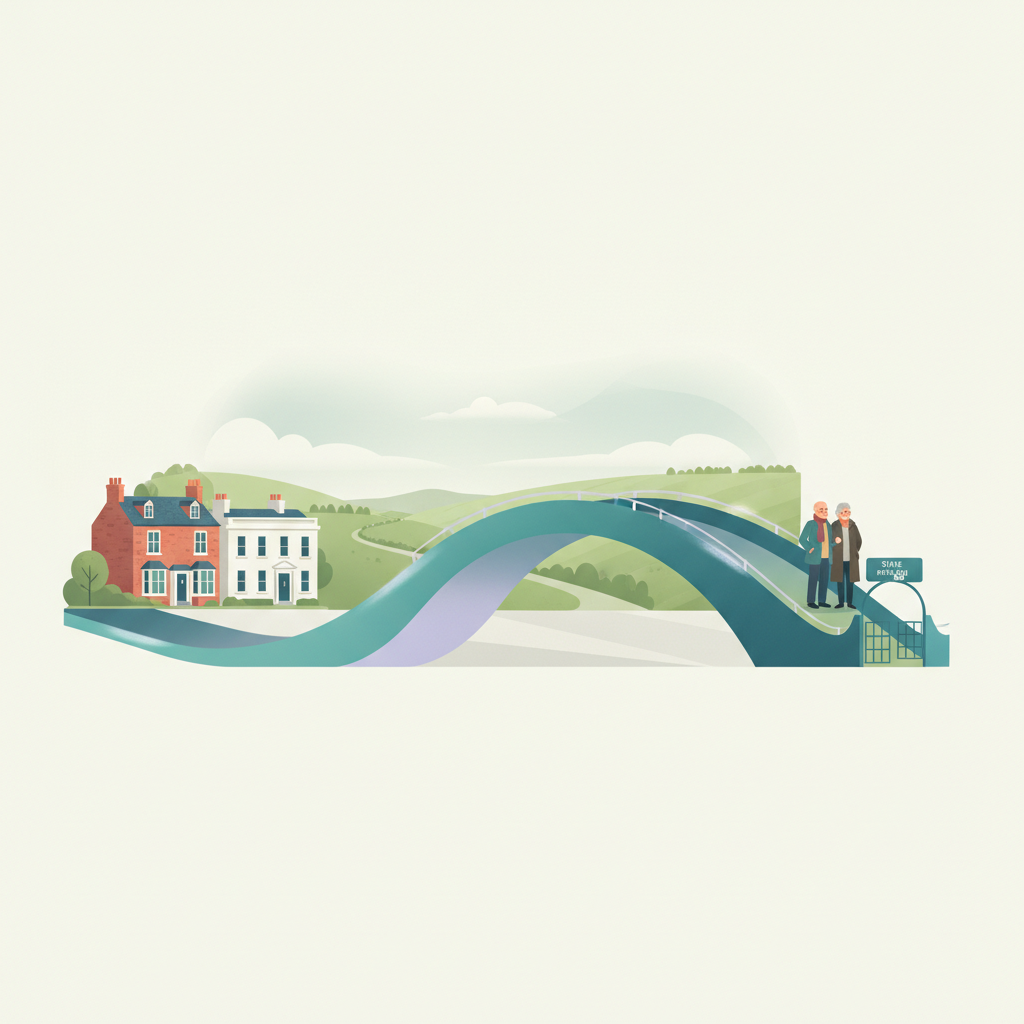
Plenty of people stop work in their early sixties — but the State Pension does not arrive until 66 or 67. That leaves a gap of several years where your private pension has to do all the heavy lifting. Crossing that gap is what advisers call building a pension bridge, and how you build it shapes both your tax bill and how long your money lasts.
What is the pension bridge?
The bridge is the period between the day you finish work and the day your State Pension starts. If you retire at 62 and your State Pension Age is 67, that is a five-year stretch funded entirely by your own savings — typically a defined contribution pension in flexi-access drawdown, perhaps topped up by ISAs or cash.
It matters because your income profile is not flat across retirement. In the bridge years you carry the whole cost of living yourself. Then the State Pension switches on and a guaranteed, inflation-linked income lands on top. A drawdown plan that ignores that step-change tends to either run too hot early on or leave you paying more tax than you need to later.
The figures that define your bridge
Three numbers set the shape of the problem, and all three are worth checking for the current tax year:
- The full new State Pension is £241.30 a week in 2026/27 — about £12,548 a year — after April 2026's 4.8% triple-lock rise. Your own figure depends on your National Insurance record, so it is worth getting a State Pension forecast from GOV.UK.
- Your State Pension Age is currently moving from 66 to 67, phased in between April 2026 and April 2028. Anyone born from 6 March 1961 onwards has a State Pension Age of 67. That date is the far end of your bridge.
- The Personal Allowance — the slice of income taxed at 0% — is £12,570, and frozen until April 2031. That single figure drives most of the tax planning below.
You can normally access a private pension from age 55 (rising to 57 in April 2028), so for most early retirees the pension is available well before the bridge even begins.
Why the State Pension changes everything
Here is the quiet catch. The full new State Pension of roughly £12,548 almost exactly fills your £12,570 Personal Allowance. Once it starts, you have virtually no tax-free room left — so every pound of taxable pension income you draw on top is taxed, mostly at 20%, and a larger income could tip you toward the 40% higher-rate band that begins at £50,270.
The practical consequence is that, for many people, drawdown withdrawals should step down once the State Pension arrives, rather than stay level. In the bridge years you might draw, say, £20,000 from the pension. After State Pension Age, you may only need to draw £8,000 to £10,000 to keep your total income roughly the same. Drawing the same amount as before would simply pile income on top of the State Pension and hand more of it to HMRC.
The tax opportunity in the bridge years
The flip side is that the bridge can be a genuinely tax-efficient window. With no State Pension yet in payment, your Personal Allowance is largely unused — so there is room to draw taxable pension income at low or zero tax rates. Common approaches people weigh up include:
- Filling the Personal Allowance. Drawing up to around £12,570 of taxable pension income a year during the bridge can incur little or no income tax, depending on your other income.
- Blending in tax-free cash. Up to 25% of a pension can usually be taken tax-free. Spreading that across the bridge — rather than taking it all on day one — can keep total income low and leave more invested. Our guide on taking your tax-free lump sum all at once versus in phases walks through the trade-offs.
- Using ISAs alongside the pension. ISA withdrawals are tax-free and do not count as income, so they can supplement pension income without using up your allowance or pushing you into a higher tax band.
Used well, the bridge years let some people draw a meaningful income while paying far less tax than they will once the State Pension is running.
The big risk: drawing too hard, too early
A bridge is, by design, a high-withdrawal phase — you are leaning heavily on the pot before any State Pension relief arrives. That collides with one of the most under-appreciated dangers in drawdown: sequence of returns risk. If markets fall in the first few years and you are selling investments to fund withdrawals, you crystallise losses you can never fully recover, even if markets bounce back later.
Because the bridge front-loads your withdrawals, it amplifies that risk. Two things help manage it: holding a cash buffer of one to two years' spending so you can pause selling investments during a downturn, and being realistic that a heavier early draw needs a more resilient portfolio behind it.
A worked illustration
Example (hypothetical): Imagine someone retiring at 62 with a £350,000 pension and a State Pension Age of 67 — a five-year bridge. They want around £22,000 a year to live on. In the bridge years they might draw roughly £18,000 of taxable income, using most of the Personal Allowance and only a little of the basic-rate band, plus some tax-free cash, keeping the tax bill modest. From 67, the State Pension of about £12,548 covers more than half their need, so their pension drawdown could fall to around £9,000 to £10,000 a year to hold income steady.
The numbers are purely for illustration — your own State Pension, pot size, investment returns and spending will all be different, and tax rules can change. But the shape is what matters: a heavier draw early, a lighter draw once the State Pension lands.
Other factors to weigh
- Deferring the State Pension. You do not have to take the State Pension the moment you reach State Pension Age. Deferring increases it by just under 5.8% for each full year you put it off, which suits some people and not others.
- The Money Purchase Annual Allowance. Once you take taxable income from flexi-access drawdown, the amount you can still pay into pensions usually drops to £10,000 a year. That matters if you plan to keep working part-time during the bridge.
- Inflation over the bridge. Even a five-year bridge erodes in real terms; the income you set today will buy a little less by the time the State Pension arrives.
Key takeaways
- The pension bridge is the gap between stopping work and your State Pension starting — often several years funded entirely by your own savings.
- The full new State Pension (about £12,548 in 2026/27) nearly fills the £12,570 Personal Allowance, so income drawn on top of it is largely taxable.
- For many people, drawdown withdrawals should step down once the State Pension begins, not stay level.
- The bridge years can be a tax-efficient window to draw income using the Personal Allowance and phased tax-free cash.
- Front-loaded withdrawals increase sequence-of-returns risk — a cash buffer and a resilient portfolio help.
A note on risk
This article is general information, not personalised advice. Pension drawdown keeps your money invested, so its value can fall as well as rise and your income is not guaranteed — draw too much, or suffer poor returns early, and the pot can run out. All figures quoted are for the 2026/27 tax year and depend on your individual circumstances; tax rules and allowances can change. Before acting, compare your options and consider speaking to a qualified, regulated financial adviser.
If you would like to see how a bridge might work for your own pot, try our pension drawdown calculator or map your income year by year with the retirement planner. To understand exactly when your bridge ends, read our guide to the State Pension Age changes for 2026-2028 and check how much State Pension you will get in 2026/27.
You can also compare drawdown providers to make sure the platform you use keeps charges low and gives you the flexibility a stepped-income strategy needs.