Spring Statement 2026: What It Could Mean for Your Pension and Retirement Plans
The Spring Statement on 3 March 2026 may bring changes affecting pensions, tax thresholds, and retirement planning. Here's what retirees and those approaching retirement need to consider.
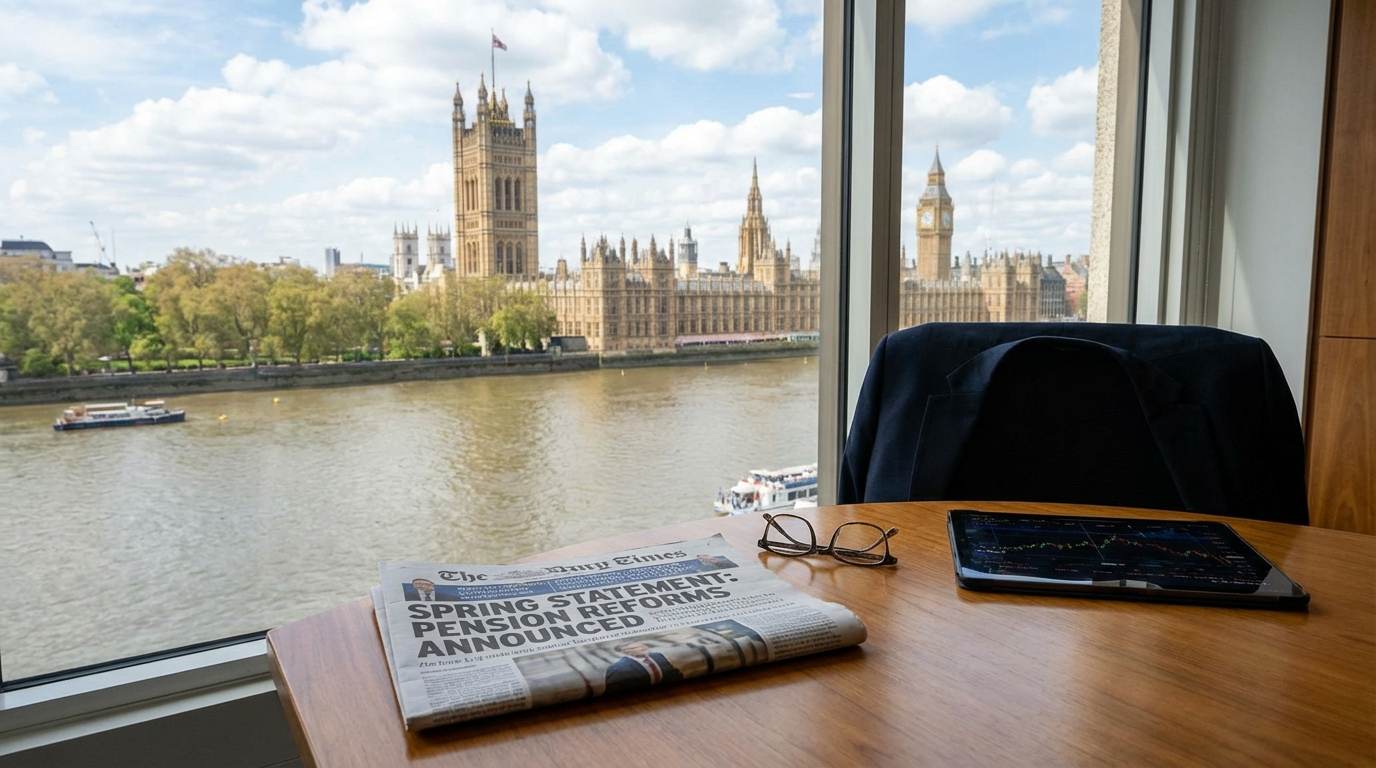
What Is the Spring Statement?
The Spring Statement is the government's mid-year financial update, typically delivered by the Chancellor in March. Unlike a full Autumn Budget, the Spring Statement has historically been a more modest event — a fiscal update rather than a package of major policy changes.
However, in recent years the Spring Statement has occasionally carried significant announcements for savers and retirees. With the Autumn Budget 2025 having introduced major changes to pension inheritance tax rules and employer National Insurance contributions, many in the retirement planning world are watching the Spring Statement 2026 closely.
Ready to Compare Your Options?
Use our free pension drawdown calculator to see how much income your pension could provide, or compare drawdown providers to find the right fit for your needs.
Key Areas Pension Savers Are Watching
1. Pension Inheritance Tax Implementation
The Autumn Budget 2025 announced that pension pots will be brought into the scope of inheritance tax from April 2027. This was one of the most significant changes to pension planning in years, and the detail is still being finalised. The Spring Statement may provide further clarity on:
- How the new rules will work in practice for those already in drawdown
- Whether any exemptions or transitional reliefs will apply
- How defined contribution pensions will interact with existing estate planning
- The position for nominated beneficiaries and death benefits
Many people with large pension pots are currently reconsidering their withdrawal strategies. If pension pots will eventually form part of the taxable estate, the traditional advice to draw down other assets first and leave the pension until last may need to be revisited. See our guide on pension inheritance tax changes 2027 for more detail.
2. Income Tax Thresholds: Freeze or Change?
The personal allowance has been frozen at £12,570 since 2021/22, and this freeze was extended through to 2027/28 in the Autumn Budget 2025. With inflation having pushed many retirees into paying income tax on pension income they might previously have received tax-free, there is pressure on the government to either maintain or modify the freeze.
For pension drawdown users, the personal allowance is critical. The first £12,570 of annual pension income is received free of income tax. Any change — upward or downward — directly affects how much retirees keep from their pension withdrawals.
If you're relying on careful drawdown planning that keeps income within particular tax bands, it's worth monitoring any changes that may affect:
- The personal allowance (£12,570)
- The basic rate threshold (£50,270)
- The higher rate threshold (£125,140 for additional rate)
3. Capital Gains Tax Rates
The Autumn Budget 2025 increased Capital Gains Tax rates. The Spring Statement may address any further changes or provide implementation guidance. For retirees drawing down from a SIPP that holds investments, capital gains within the pension wrapper are not subject to CGT — but those who also hold ISAs, investment accounts, or property should monitor developments.
4. National Insurance and the State Pension Triple Lock
The State Pension triple lock was confirmed for 2025/26 and 2026/27, delivering a 4.8% increase from April 2026. The new full State Pension rises to approximately £230 per week (£11,973 per year) from April 2026.
The Spring Statement may contain any preliminary signals about the triple lock beyond 2027. For retirees whose income planning combines pension drawdown with State Pension, the trajectory of the State Pension significantly affects how much they need to draw from private pensions.
5. Savings and Interest Rates
Although the Bank of England sets interest rates independently, the economic forecasts in the Spring Statement affect expectations for future rate movements. For those in drawdown who hold cash reserves or bonds as part of their investment strategy, the interest rate outlook matters.
Higher interest rates generally mean:
- Better returns on cash buffers held within the drawdown strategy
- Higher annuity rates for those considering converting some or all of their pot
- Potential headwinds for equity valuations (though this relationship is not straightforward)
Conversely, falling rates — which many expect as inflation continues to moderate — would reduce cash returns but potentially support equity prices.
What the Spring Statement Cannot Change
It's worth noting what is locked in for the coming tax year regardless of the Spring Statement. The following are confirmed for 2026/27:
- Annual Allowance: Remains £60,000 (or 100% of earnings, whichever is lower)
- Money Purchase Annual Allowance (MPAA): Remains £10,000 — critically important if you've already flexibly accessed your pension (the MPAA triggers once you start drawing taxable income from a drawdown arrangement)
- Pension commencement lump sum (PCLS): Tax-free cash cap remains at £268,275 (25% of the lump sum and death benefit allowance)
- State Pension: Rising to £230.25/week from April 2026 (4.8% triple lock increase)
- Normal Minimum Pension Age: Rising from 55 to 57 in April 2028 — not changing in 2026
Planning Considerations While You Wait
Whether or not the Spring Statement brings significant pension announcements, there are practical planning actions worth considering around this time of year:
Tax Year End Planning (Before 5 April 2026)
The run-up to tax year end (5 April) is a natural time to review your drawdown strategy:
- Have you used your personal allowance efficiently? If your pension income has been lower than the personal allowance, you may be able to make additional withdrawals tax-free
- Have you used your ISA allowance? The annual ISA limit is £20,000 and cannot be carried forward
- Pension contributions: If you're still contributing to a pension, the £60,000 annual allowance and any carry-forward must be used before 5 April
- Capital gains: The £3,000 annual CGT allowance (reduced from £6,000 in 2024/25) can be used to crystallise modest gains before tax year end
Review Your Drawdown Withdrawal Rate
The start of the tax year is a good time to review whether your withdrawal rate remains sustainable. Key questions to ask:
- How has the portfolio performed over the past year?
- Is the current withdrawal rate above or below 4%?
- Have your income needs changed?
- Does your cash buffer remain sufficient (ideally 1-3 years of expenses)?
Consider Your Inheritance Tax Position
With the April 2027 IHT changes approaching, it's worth reviewing your estate planning now rather than waiting. Consider:
- How large is your pension pot likely to be in April 2027?
- Would it be more tax-efficient to draw down more now and use the funds during your lifetime?
- Does your nomination of benefits/expression of wishes reflect your current wishes?
- Should you speak to a solicitor about updating your will in light of the new rules?
How Retirees Can Prepare for Policy Changes
Whatever the Spring Statement brings, the principles of good drawdown planning remain consistent:
Build Flexibility Into Your Plan
A drawdown strategy that depends entirely on one specific tax or policy outcome is fragile. Aim for a plan that works under a range of scenarios — whether tax thresholds move slightly up or down, whether rates stay higher for longer, or whether additional changes to pension rules emerge.
Maintain a Cash Buffer
A 1-3 year cash reserve within your drawdown portfolio protects you from having to sell investments at depressed prices to meet income needs. It also provides flexibility to reduce withdrawals temporarily if markets fall or policy changes affect your planning assumptions.
Review Annually — or After Major Events
Major budget statements are natural trigger points to review your retirement income plan. Key areas to check after any significant policy announcement include:
- Has anything changed that affects your tax position?
- Do your withdrawal amounts still make sense given current allowances and bands?
- Should your investment allocation be adjusted?
- Do your death benefit nominations still reflect your wishes?
Staying Informed
The easiest way to stay on top of pension policy changes is to follow reliable sources:
- GOV.UK — official announcements and policy documents
- MoneyHelper — government-backed guidance service
- FCA — regulatory updates affecting pension products
- The Pensions Regulator — workplace and trust-based pension updates
- Specialist financial press such as FT Adviser, Money Marketing, and Pensions Expert
Understanding the general direction of policy — even before final details are confirmed — allows you to think through scenarios and avoid making rushed decisions when announcements are made.
💡 Pension planning help: Compare drawdown providers with our Provider Finder tool or model your income with our Drawdown Calculator.
Key Takeaways
- The Spring Statement may bring further detail on the pension IHT changes coming in April 2027 — worth monitoring
- Income tax threshold freezes remain in place through 2027/28, affecting how much pension income can be received tax-free
- Confirmed 2026/27 figures (Annual Allowance £60,000, MPAA £10,000, PCLS cap £268,275) remain unchanged
- Tax year end (5 April) is a natural planning point — review ISA contributions, pension withdrawals, and CGT position
- Build flexibility into your drawdown plan so it can absorb policy changes without requiring major restructuring
- Review your estate planning in light of the April 2027 pension IHT changes
This article is for informational purposes only and does not constitute financial advice. Pension and tax rules can change at any time. Speak to a qualified financial adviser for guidance tailored to your personal circumstances.