OBR Spring Statement 2026: One Million More Pensioners to Pay Income Tax by 2031
The OBR warned today that a million extra pensioners will be drawn into income tax by 2031 due to the frozen personal allowance and rising State Pension. Here's what it means for pension drawdown savers — and how to plan.
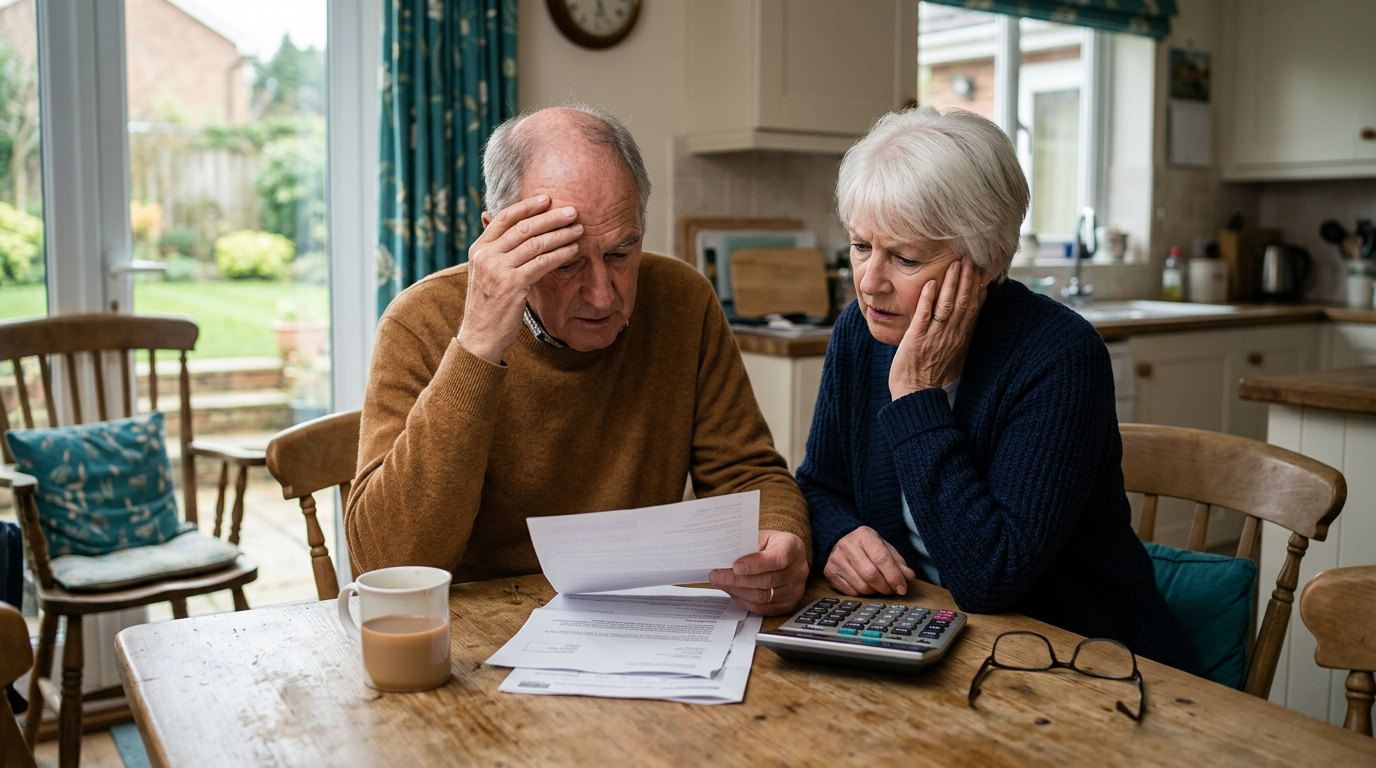
OBR Spring Statement Warning: One Million More Pensioners to Pay Income Tax by 2031
The Office for Budget Responsibility (OBR) delivered a sobering forecast alongside Rachel Reeves's Spring Statement on 3 March 2026: an additional one million pensioners are expected to be drawn into paying income tax by 2031. The culprit? A combination of the government's frozen personal allowance and the rising State Pension under the triple lock — a pincer movement that is quietly eroding the retirement incomes of millions of people who assumed they would never owe HMRC a penny.
For pension drawdown savers, the implications go further still. Those already taking income from a private pension are particularly exposed — and understanding how the personal allowance freeze interacts with drawdown withdrawals is now more important than ever.
What the OBR Actually Said
The OBR's economic and fiscal outlook, published alongside the Spring Statement, confirmed that the personal allowance will remain frozen at £12,570 until at least 2028, extended further by the Chancellor's decision not to unfreeze thresholds. Meanwhile, the State Pension is rising each year under the triple lock (the higher of earnings growth, inflation, or 2.5%).
The maths is straightforward but painful: the State Pension is rising; the personal allowance is not. By 2031, the full new State Pension is projected to reach approximately £13,000 per year — significantly above the frozen personal allowance. At that point, any pensioner receiving the full State Pension will owe income tax even before touching a penny of private pension savings, ISAs, rental income, or drawdown withdrawals.
The OBR estimates this will pull an additional one million pensioners into the income tax net by 2031. That is on top of the hundreds of thousands already paying tax on their State Pension today.
Why Pension Drawdown Savers Are Disproportionately Affected
If you receive a full State Pension and take any income from a pension drawdown arrangement, your tax position is already far more complex than the headline figures suggest.
Here is a worked example using 2026/27 figures:
- Full new State Pension 2026/27: £11,973 per year (£230.25 per week × 52)
- Personal allowance 2026/27: £12,570
- Remaining allowance for other income: £597
This means that in 2026/27, a pensioner receiving the full State Pension has just £597 of personal allowance left before additional income becomes taxable at 20%. Any drawdown withdrawal beyond that — whether from a SIPP, personal pension, or workplace pension — is taxed in full at 20% (or higher if it pushes income into the 40% band).
By 2031, based on OBR projections, the State Pension alone will likely exceed the personal allowance. At that point, every pound of pension drawdown income could be taxed at 20% from the first pound withdrawn.
The Government's Limited 'Carve-Out' — and Why It Doesn't Help You
The government has previously stated it will not tax pensioners whose only income is the State Pension. However, as of the Spring Statement 2026, HM Treasury had still not confirmed the precise mechanism for how this exemption would work in practice.
More critically, this carve-out does not apply to pension drawdown savers. If you have a private pension in drawdown — or any other source of income — you fall outside the exemption entirely. The narrow protection is aimed solely at those with no income other than the State Pension, which describes a relatively small proportion of retirees in practice.
The OBR's projection of one million additional taxpayers refers specifically to people being drawn into tax through the combination of triple lock rises and frozen thresholds — the majority of whom will have some form of private savings or pension income alongside their State Pension.
How HMRC Collects Tax on State Pension — and the PAYE Complexity
Many pensioners are surprised to discover that HMRC collects tax on State Pension income not directly from the DWP, but by adjusting the tax code applied to their private pension. If your private pension provider deducts PAYE tax on your behalf, they will receive a tax code from HMRC that accounts for your State Pension income.
This can create a situation where:
- Your first drawdown withdrawal appears heavily taxed (because the code reflects cumulative State Pension income)
- Your tax code appears with a very low or zero tax-free element (such as code 0T or BR)
- HMRC adjusts your code mid-year if they detect underpayments, creating unexpected monthly reductions
As the State Pension rises toward and beyond the personal allowance threshold, many people find that their drawdown payments are effectively taxed from the first pound. Many are unaware of this until they receive a tax code notice or an unexpected demand from HMRC.
Planning Strategies to Manage Your Tax Position
While this is undeniably a difficult fiscal environment for pensioners, there are several strategies many people consider to manage their tax exposure. These are educational points — not personal financial advice — and the right approach will depend on your individual circumstances.
1. Draw Income in the Years Before State Pension Begins
If you have not yet claimed your State Pension, you have the full personal allowance available for drawdown income. Many people find it tax-efficient to withdraw more heavily from their pension during the gap years between retirement and State Pension age, making use of the full £12,570 allowance at 20% rather than facing a compressed allowance once the State Pension starts.
2. Consider the 25% Tax-Free Pension Commencement Lump Sum (PCLS)
Up to 25% of your pension pot (subject to the Lump Sum Allowance of £268,275) can be taken as a tax-free lump sum. Taking the PCLS before State Pension begins — or early in drawdown — means you are not using your personal allowance for tax-free income, which can be a more efficient structure depending on your total pot size.
3. ISA Withdrawals as a Tax-Free Top-Up
Income drawn from ISAs does not count as taxable income and is not reported to HMRC. For pensioners approaching the £12,570 personal allowance limit from their State Pension alone, supplementing retirement income with ISA withdrawals rather than additional drawdown can help manage the overall tax position. ISA income does not affect tax codes, PAYE calculations, or means-tested benefit calculations.
4. Phased Drawdown — Crystallise Gradually
Rather than moving the entire pension into drawdown at once, many people consider phasing crystallisation over several tax years. Each crystallisation event releases a 25% tax-free cash element, which may be useful in years where other income is lower. This approach requires careful planning and typically benefits from professional advice.
5. Defer Drawdown Withdrawals Strategically Around the Tax Year
Because PAYE works on cumulative basis throughout the tax year, timing larger drawdown withdrawals earlier in the tax year (April–June) can sometimes result in lower initial tax deductions as the cumulative personal allowance catches up. However, emergency tax codes on initial pension payments can complicate this — keep P55/P53Z reclaim forms in mind if you are overtaxed.
6. Consider a Partial Annuity
Some people consider converting a portion of their drawdown fund into a guaranteed annuity to cover fixed expenses, while leaving the remainder in flexible drawdown. A partial annuity can simplify tax planning by creating a predictable income level that, combined with the State Pension, can be optimised around the personal allowance. This removes sequencing risk from a portion of the portfolio too.
The 2027 Pension IHT Change — and Why the Tax Picture is Getting More Complex
From April 2027, unspent pension funds will be brought within the scope of inheritance tax for the first time. Combined with the income tax drag from the frozen personal allowance, this represents a double squeeze on pension savers: more tax during retirement through PAYE/income tax, and more tax on death through IHT.
The OBR's Spring Statement forecast is a reminder that tax policy around pensions has been tightening for several years, and the trend is unlikely to reverse in the short term. Planning ahead — reviewing drawdown rates, nomination of beneficiaries, and estate planning structures — is becoming increasingly important for anyone with a meaningful pension pot.
The Pension Schemes Bill and Its Potential Impact
Separately, the Pension Schemes Bill — currently progressing through Parliament — includes provisions for consolidation of workplace pensions and guided retirement income products. The bill also contains a controversial 'mandation power' that would allow the government to direct pension schemes to invest in specific UK assets, which the trade body Pensions UK called for withdrawal of on the same day as the Spring Statement.
While these provisions primarily affect workplace schemes rather than personal drawdown arrangements, the direction of travel suggests greater government involvement in how pension assets are managed — a backdrop worth watching for anyone with a SIPP or personal pension in drawdown.
What to Do Now
The OBR's warning about one million more pensioners entering income tax by 2031 is not abstract: it is a concrete projection based on current policy. For many people already in pension drawdown, the compression of the personal allowance is already a lived reality.
Key actions many people consider at this point:
- Check your current tax code and understand how HMRC is calculating your State Pension liability
- Review whether your drawdown withdrawal level is appropriate given your remaining personal allowance
- Consider whether ISA withdrawals could supplement or replace some drawdown income tax-efficiently
- Review beneficiary nominations on your pension — particularly ahead of the April 2027 IHT change
- If you have not yet taken any tax-free cash, understand how the Lump Sum Allowance interacts with your crystallised funds
The interaction between State Pension income, frozen personal allowances, and pension drawdown taxation is complex and highly individual. What works well for one person's circumstances may be entirely wrong for another's.
Speak to a qualified financial adviser who specialises in retirement income planning to review your specific situation. A comprehensive review of your drawdown rate, tax position, and estate planning — in light of both the Spring Statement projections and the 2027 IHT changes — is one of the most valuable things you can do for your long-term financial security.